
Discovering a fascinating account of Sir Walter Scott’s 1825 visit to Maria Edgeworth at Edgeworthstown House.
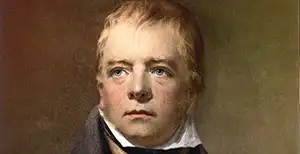
The Maria Edgeworth Visitor Centre is delighted to welcome two important new additions to its ever-growing collection of books. Among them is a particularly fascinating volume that takes us back to August 1825, when one of Scotland’s greatest novelists, Sir Walter Scott, visited Maria Edgeworth at her family home in Edgeworthstown.
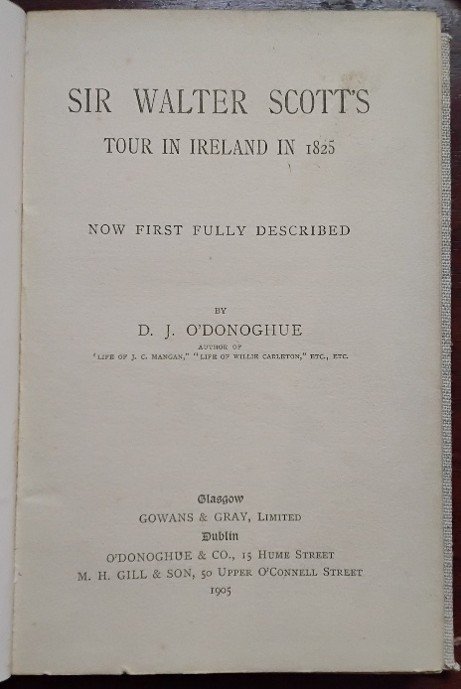
Published in 1905, Sir Walter Scott’s Tour in Ireland in 1825, Now First Fully Described, was written by Irish bibliographer and biographer David James O’Donoghue. Drawing on historical records, correspondence and contemporary accounts, O’Donoghue reconstructs Scott’s journey through Ireland, documenting the people he encountered and the places he visited.
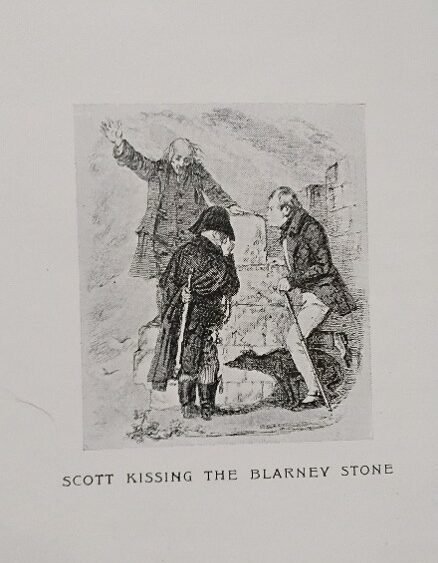
The book even features a memorable frontispiece depicting Scott kissing the Blarney Stone!
However, for us at the Maria Edgeworth Visitor Centre, one of its most interesting passages is the account of Scott’s visit to Edgeworthstown.
Maria Edgeworth and Sir Walter Scott were two of the most influential novelists of the early nineteenth century. Although they came from different literary and cultural backgrounds, they shared a mutual admiration and a significant influence on one another’s writing.
Their literary connection began, in many ways, with Maria Edgeworth’s Castle Rackrent, published in 1800. This pioneering Anglo-Irish novel offered readers a vivid portrayal of Irish life through the voice of its narrator, Thady Quirk. Its use of regional dialect, local customs and distinctive characters brought a new authenticity to the novel.
Scott openly acknowledged the influence of Castle Rackrent on his own work. Inspired by Edgeworth’s approach to portraying regional identity and character, he sought to bring a similar richness and authenticity to Scottish history and society in his own historical novels.
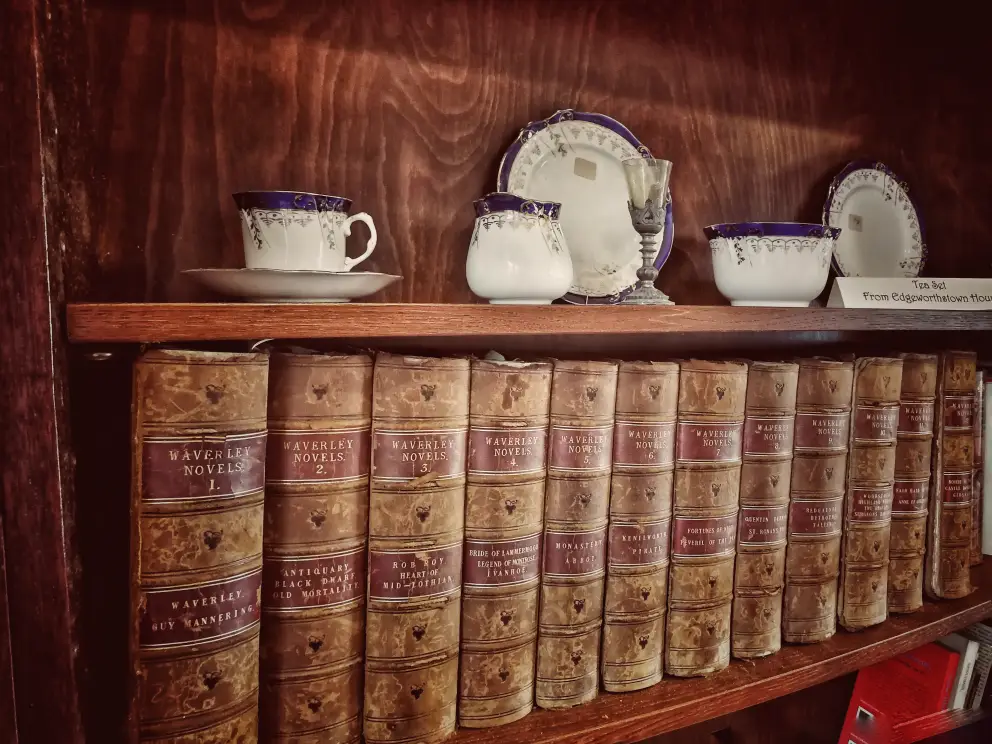
His celebrated novel Waverley, published in 1814, is often regarded as the beginning of the modern historical novel. The literary paths of Edgeworth and Scott were therefore closely connected, with both writers helping to establish the importance of regional identity, history and local character in fiction.
O’Donoghue’s account provides a charming glimpse into Scott’s visit to Edgeworthstown House in August 1825.
After being briefly delayed in Dublin, Scott arrived at approximately 11 o’clock in the morning, accompanied by Captain and Mrs Scott and John Gibson Lockhart, his biographer and son-in-law.
The household had arranged a warm welcome for their distinguished visitors. Refreshments and fruit were provided, helping the travelling party to settle in after their journey.
It is a small detail, perhaps, but one that brings the occasion to life. Through these historical accounts, we can imagine the conversations taking place within Edgeworthstown House as two celebrated literary figures met in person.
The visit was not simply a brief social call. Maria Edgeworth subsequently accompanied Scott on part of his travels towards Killarney, where they also met the historian Henry Hallam.
It is a wonderful reminder of the intellectual and literary networks that connected Ireland and Britain during this period. Writers, historians and thinkers travelled, corresponded and exchanged ideas, helping to shape the literary landscape of the nineteenth century.
For the Maria Edgeworth Visitor Centre, this 1905 publication is more than an interesting historical account. It provides another valuable perspective on Maria Edgeworth’s life, her literary influence and the friendships she maintained with some of the most celebrated writers of her time.
Books such as this help us piece together the stories behind the literary connections, bringing us closer to the people and conversations that shaped an extraordinary period in literary history.
We are delighted to add this volume to our growing collection and look forward to sharing more discoveries from our library with visitors.
Sir Walter Scott credited Maria Edgeworth’s Castle Rackrent (1800) as an important inspiration for his own historical fiction. More than two centuries later, their literary connection remains an important part of Maria Edgeworth’s legacy.